Twenty years of Clear Horizon – Reflections on what’s changed, and what’s ahead
Twenty years ago, MEL looked and felt quite different. Many of us were asked to “fix a questionnaire” rather than encourage deep thinking about change.
Since then, the field has grown, matured, and become more aware of complexity, context, and our own role as evaluators. Clear Horizon has evolved alongside this shift. What started as a small group of evaluators with ambitious ideas has grown into a 50+ strong community of people genuinely committed to doing this work well: ethically, creatively, and with an unwavering respect for those leading change on the ground.
As we mark our twentieth year, we take a moment to ask some of our colleagues what has changed, what lies ahead, and what keeps them inspired.
Jess Dart
I remember when I first started as an evaluation consultant in 2002, people constantly asked me, “Can you look at my questionnaire?”. I would take a breath and say,
“Well, maybe we should consider the purpose of the evaluation first and see if you even need a questionnaire!”
Much has changed in our field since then; people now understand that evaluation encompasses a lot more than questionnaire design. The field has continued to grow and into the broad church it is today – with such a wide array of different philosophical approaches, focus areas, and topics. Today, there are over 1000 members of the Australian Evaluation Society! Over the years, we have been involved in several “waves” of hot topics. I recall in the 2000s, it was all about outcomes and measuring them and we did so much theory of change at this time. Then in the 2010s, we experienced the rubric revolution and went deep on whose values were being included. In the past decade, large-scale systems change and place-based approaches have emerged, and we’ve been grappling with how to evaluate them. It turned things upside down a bit as we came to understand our role in adding value – not just judging it. And then of course there is data and AI, which will no doubt shape the next decade. One thing is certain: it remains a vibrant community that keeps on movin’.
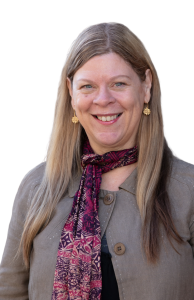
Ulla Keech-Marx
Much has changed in the field of MEL over the past 20 years! As MEL practitioners, we are now more aware of the complexities involved in change processes, as well as our own positionality and biases.
I like to think that, as a profession, we are more humble now, viewing our role as supporting change makers to better understand and manage change, rather than as ‘objective’ observers or experts whose responsibility is to assess others’ work.
What makes you most excited at Clear Horizon right now?
I’m thrilled to be part of Clear Horizon because we are actively challenging boundaries, questioning assumptions, and shaping the MEL field in Australia and internationally in a way that matches my core values.

Anna Strempel
In your opinion, what does the future of impact measurement and evaluation look like, and how can we help shape it?
As changemakers across sectors increasingly adopt a systems perspective, it’s clear that our understanding, measurement, and communication of impact will need to keep evolving as well.
I believe this will require evaluators to change not only the way we ‘do’ evaluation but also our perception of ourselves and our roles. We have often seen ourselves – and been seen by others – as objective or impartial observers whose work exists outside the system – or at least, that has been the ideal.
However, as we continue to learn how change occurs over time and across systems, I think we’ll need to embrace the idea that evaluators and our work are fundamentally part of the systems we engage with, and that we can’t help but influence them – and be influenced by them! Approaches like developmental evaluation have operated from this standpoint for some time, and I am curious to see how the broader evaluation field develops as we increasingly work at the systems level.
What makes you most excited at Clear Horizon right now?
Many evaluators and systems thinkers are working to ensure that evaluation enables, rather than constrains, systems transformation. Clear Horizon is part of leading this effort, experimenting with innovations and having the courage to fail and learn. I’m excited about the new possibilities emerging and proud to be part of a company that genuinely prioritise social justice and environmental sustainability.
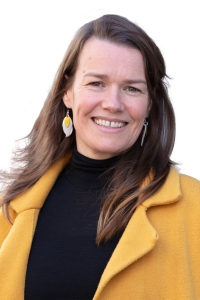
Mutsumi Karasaki
There are now more change-making efforts and practices using a place-based and/or systems-change approach than ever before. In capturing the impact of such work, there has been a need to expand our measurement and evaluation methods beyond conventional, programmatic approaches. For me, this means embracing complexity, non-linearity, and ongoing problem-solving.
In your opinion, what will the future of impact measurement and evaluation look like, and how can we contribute to shaping it?
I believe that the future of impact measurement and evaluation, particularly in place-based and/or systems-change settings, must involve deliberately and intentionally addressing power and power dynamics.
At Clear Horizon, we continue to have ongoing and meaningful discussions about how to centre and embed equity in MEL. It’s an incredibly exciting time to be part of Clear Horizon!

Track to Change
We’re also exploring something new with Track to Change. It’s not a departure from our roots; it’s the natural next step, following years of observing how people genuinely learn, adapt, and create change in complex work settings. We’ve often seen that teams need a simple, thoughtful way to understand what’s happening, together, and in real-time. Creating our own digital tool came from that realisation. It’s early days, but we’re so excited about building a space that fosters the deeply reflective, values-driven practice we’ve always believed in.

Looking ahead
Over the past twenty years, we’ve become more curious, more grounded, and more willing to question ourselves. We’re addressing increasingly complex issues with a determination to focus on equity.
Clear Horizon has always been shaped by the people in it and those we work with. That hasn’t changed. What has changed is the wide range of possibilities ahead: more systems work, equity-centred practice, digital tools, AI, and a new generation of evaluators reshaping what MEL can be.
If the first twenty years were about building something strong, the next twenty feel like an invitation to be a bit bolder. Thanks for walking alongside us on this journey!